 Amwayi
The verdict is already written
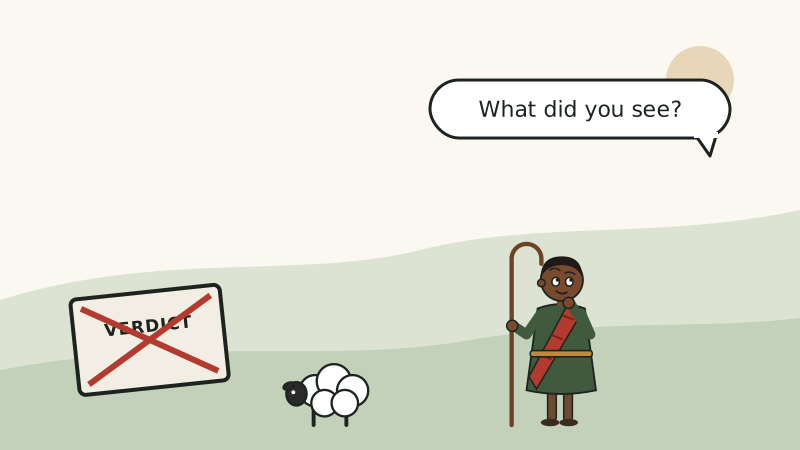
I have been paying attention to how arguments go, mine included. Someone says a first sentence. The other person has the reply ready before the sentence ends. The reply is a verdict. It only needs a signature.
A verdict ends the inquiry. If I already know you are wrong, I have no reason to learn why you think what you think. I wait for my turn. You do the same. Two people can talk for an hour and neither learns anything.
What a verdict costs
It costs me information. The person across from me holds facts I do not have: what they saw, what they lost, what they read. A question gets me those facts. A verdict gets me a defended position.
It also costs them. In my experience, people who feel judged often stop explaining and repeat their position louder. I then read the louder repetition as proof I was right. That is how the loop feeds itself.
I suspect curiosity dies this way, one conversation at a time. Nobody may decide to stop being curious. People may learn that questions get punished and verdicts get rewarded.
A check to run before I reply
I am trying three steps. They are small on purpose.
- Say the other person’s view back to them in my own words, and ask if I got it right. If they say no, I was about to argue with something they never said.
- Ask one question whose answer I do not know. “What would change your mind?” works. So does “What did you see that made you think that?”
- Name what would change my own mind before I speak. My view is that if nothing could, I do not have a position. I have a verdict.
In my first tries it took about two minutes. It does not mean I agree. I can ask a real question and still disagree after I hear the answer.
What I might be wrong about
- Some questions are settled. If someone says the earth is flat, a long curious conversation may waste both our time. I do not have a clean rule for where that line sits.
- A question can be a verdict in disguise. “Don’t you think that’s a bit naive?” is not a question. Asking well takes more than adding a question mark.
- I have tested this on myself in a few conversations, not on a large sample. The effect I describe is what I noticed, not something I measured.
- Some people argue to win, and no question will change that. I still choose how I show up. I cannot choose how they do.
What I took from it
- A verdict ends the inquiry before it starts. A question keeps it open.
- People often stop explaining when they feel judged, and I then take their louder repetition as proof I was right.
- Before replying: restate their view, ask one question I cannot answer, and name what would change my mind.
- Asking a question does not mean I agree. It means I want the facts first.
- If I cannot name what would change my mind, I am holding a verdict.
Comments